What to Do When Your House Is Flooded: A Homeowner's Guide to the First 24 Hours
By DryVantage Team · August 25, 2026
There are few things more stressful than walking into your home and finding water where it shouldn’t be.
Maybe a pipe burst while you were away. Maybe heavy rain overwhelmed your property. Maybe a basement filled with water after a storm, or a small plumbing leak suddenly turned into a major mess.
Whatever caused it, the first few moments matter. Water spreads quickly through floors, walls, ceilings, carpets, and belongings — and the longer it sits, the greater the risk of further damage and problems like mold.
The good news: you don’t have to figure it out by yourself. Here’s what to do when your house is flooded.
1. Put Safety Before Cleanup
Your first instinct may be to grab a mop, move furniture, and start cleaning. Pause first.
If there’s standing water near electrical outlets, appliances, wiring, or an electrical panel, don’t put yourself at risk — avoid any area where you’re unsure whether electricity is present.
If the flooding involves sewage or potentially contaminated water, don’t try to clean it up yourself. Contaminated water needs proper handling, cleaning, and sanitization.
Your home can be repaired. Your safety comes first.
2. Stop the Source If You Can Do So Safely
If the water is coming from a source you can safely identify and control, stopping it can prevent a lot of additional damage. A plumbing failure may keep releasing water until the supply is shut off; a damaged appliance may need to be disconnected or isolated by a qualified professional.
The key is not to take unnecessary risks just to stop the water. Once the immediate source is addressed, the next priority is getting the water out of your home.
3. Call for Professional Water Removal
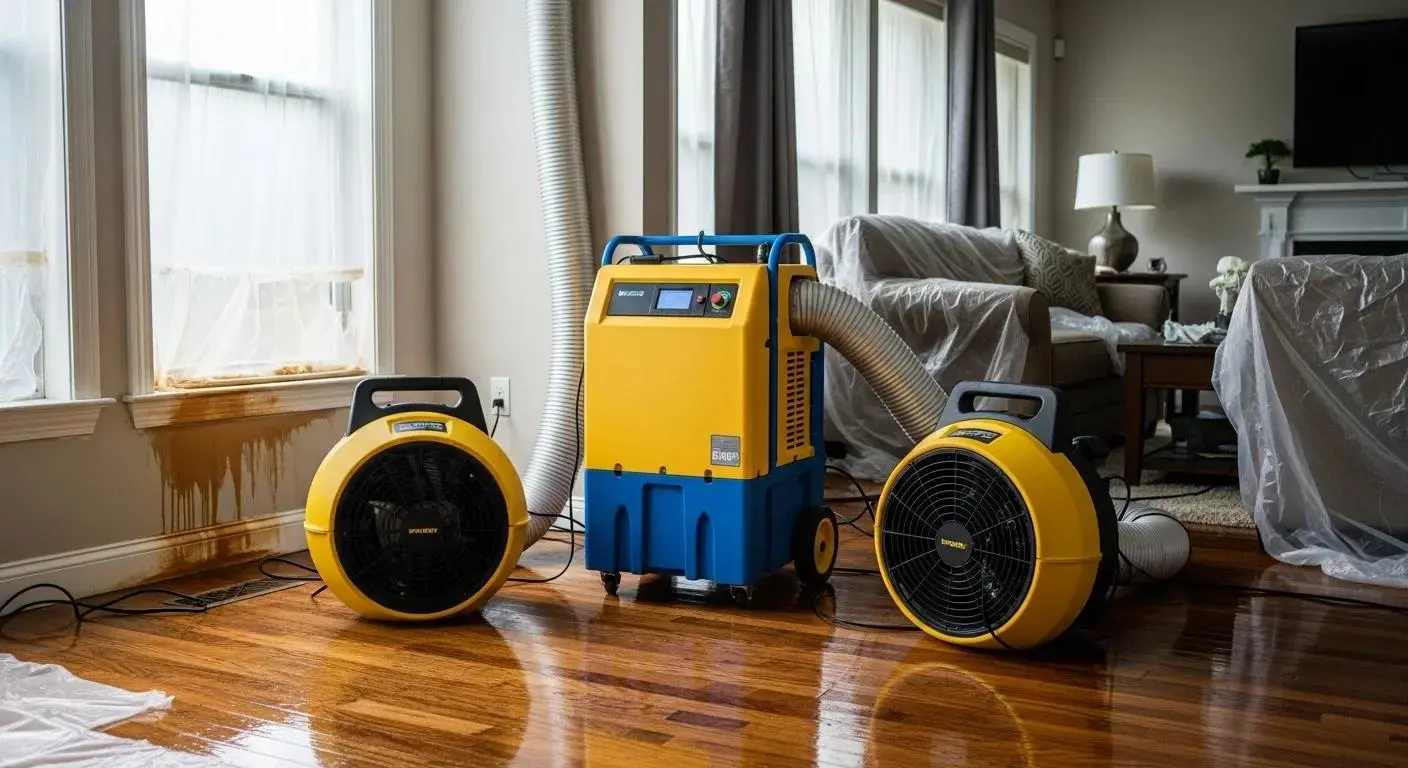
Floodwater doesn’t simply disappear once you remove what you can see. It soaks into carpet padding, flooring, drywall, insulation, and walls — and moisture often hides in areas a quick visual check won’t catch.
That’s why professional water restoration involves more than vacuuming up standing water. DryVantage Restoration provides emergency water extraction and structural drying designed to address both visible water and moisture that may remain inside the structure, using moisture detection and advanced drying equipment to identify affected areas and thoroughly dry walls, floors, and ceilings.
4. Don’t Assume a Room Is Dry Because It Looks Dry
This is one of the biggest mistakes homeowners make after a flood. A floor can look completely dry while moisture remains underneath it. A wall can feel normal to the touch while moisture is still trapped inside.
That’s why restoration teams use moisture detection equipment and monitor the drying process rather than relying on what they can see. At DryVantage, structural drying and dehumidification are part of the process — helping address moisture in affected walls, floors, and ceilings, not just the surface.
5. Be Careful With Your Belongings
A flood doesn’t necessarily mean everything in your home has to be thrown away. Depending on the type and extent of water exposure, some furniture, carpets, documents, electronics, and personal belongings may be salvageable.
DryVantage offers contents and belongings restoration, including pack-out services, safe drying of personal property, deodorization, sanitization, and restoration of certain salvageable items. Instead of immediately discarding everything, ask a restoration professional what can potentially be saved — you may be surprised by what comes back.
6. Watch for Signs of Secondary Damage
The initial flooding is only part of the problem. Water left in your home can cause additional damage over time — to building materials, flooring, furniture, and other parts of the property — and mold is a real concern after any water event.
DryVantage provides mold inspection, assessment, remediation, and preventive treatment following water-related incidents. The sooner affected areas are properly dried, the better positioned your home is for the next stage of recovery.
7. Document the Damage
Before major cleanup or restoration begins, take photos and video of the affected areas when it’s safe to do so — damaged rooms, flooring, walls, furniture, appliances, and personal belongings. This documentation is invaluable when you’re working with your insurance company.
DryVantage also provides insurance claim assistance and coordinates directly with insurers for storm and flood damage restoration, so you’re not managing that paperwork alone.
What Happens After the Water Is Removed?
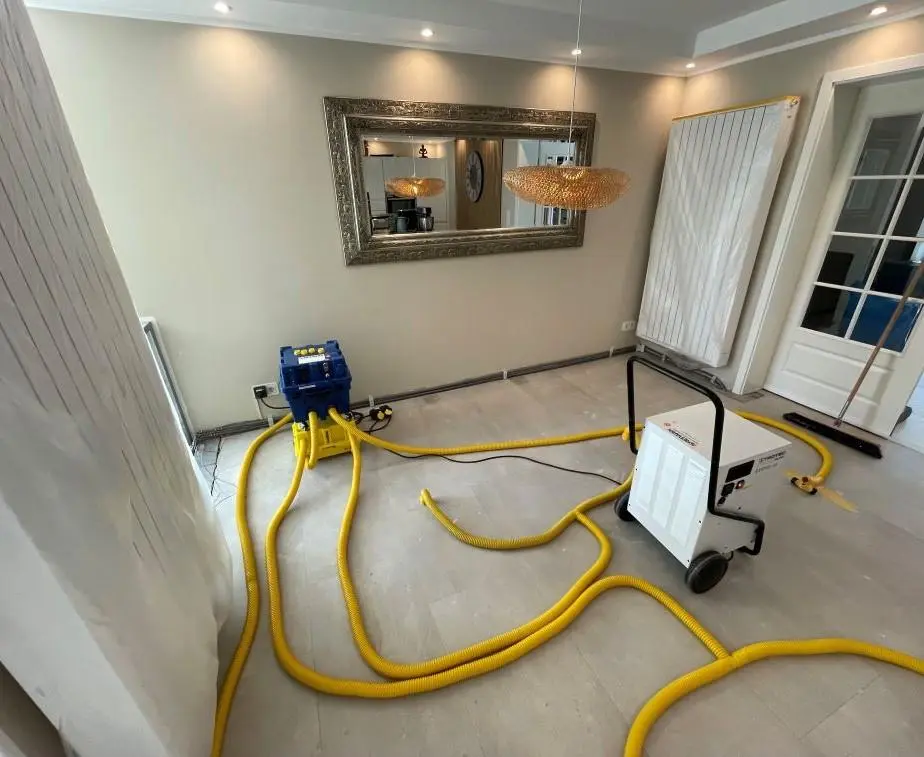
Water removal is only the beginning. A proper restoration process may involve:
- Water extraction
- Moisture detection
- Structural drying
- Dehumidification
- Mold prevention
- Cleaning and sanitization
- Contents restoration
- Repairs and reconstruction
DryVantage takes a full-service approach rather than stopping at water removal — covering emergency extraction, structural drying, mold prevention, contaminated-water cleanup, contents restoration, insurance assistance, and reconstruction. That means homeowners don’t have to coordinate every part of recovery on their own.
When Your Home Is Soaked, Start With the Right Help
A flooded house can make everything feel urgent and uncertain. The most important thing is to avoid making the situation worse: protect your safety, address the source when it’s safe to do so, and bring in professional help when the damage goes beyond a simple cleanup.
DryVantage Restoration provides 24/7 emergency water damage response across Maryland, Virginia, and West Virginia — from emergency extraction and structural drying to mold prevention and complete restoration.
When water damage happens, you don’t have to face the mess alone.
DryVantage Restoration: From Soaked to Secured.
Ready to secure your home? Book an appointment now.